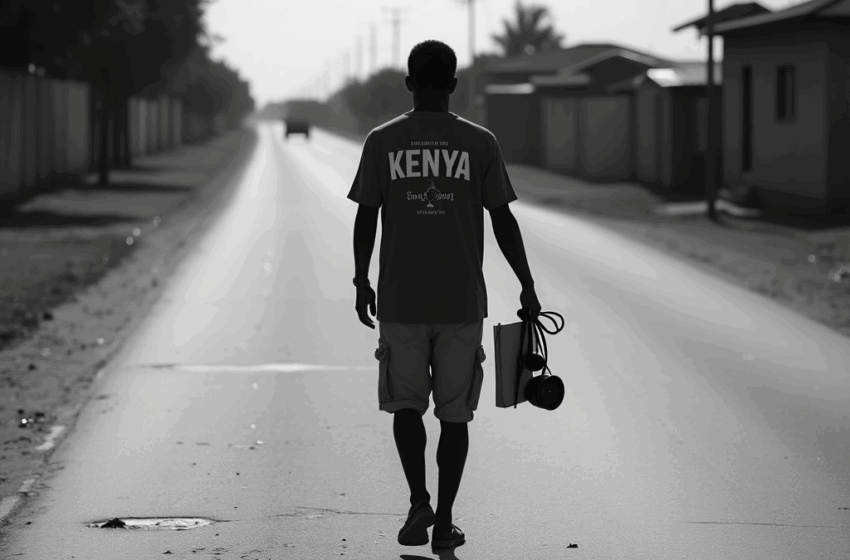
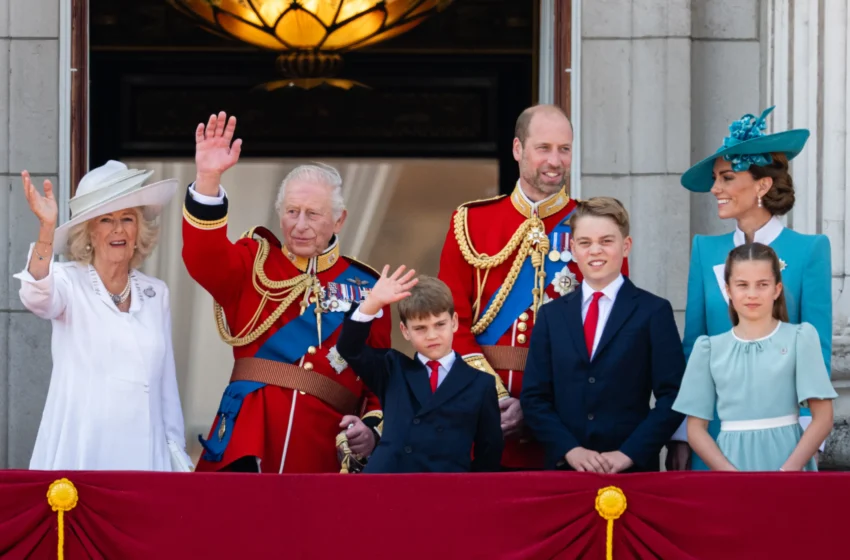
Queen Elizabeth II ascended to the British throne on 6 February 1952 while on holiday in Kenya, then still a British colony. Her father, King George VI, had just died. That accident of geography made her the first sovereign in more than two centuries to become monarch while abroad. She went on to reign for 70 years, becoming the longest-serving monarch in British history before her death on 8 September 2022, at age 96.
Her eldest son, Charles, who had spent decades waiting in the shadows of tradition, finally became King Charles III. Having surpassed Edward VII’s record as heir apparent in 2011, Charles assumed the crown in 2022 at age 73, becoming the oldest monarch ever to ascend the British throne.
But fate, uninterested in sentiment, had its own designs.
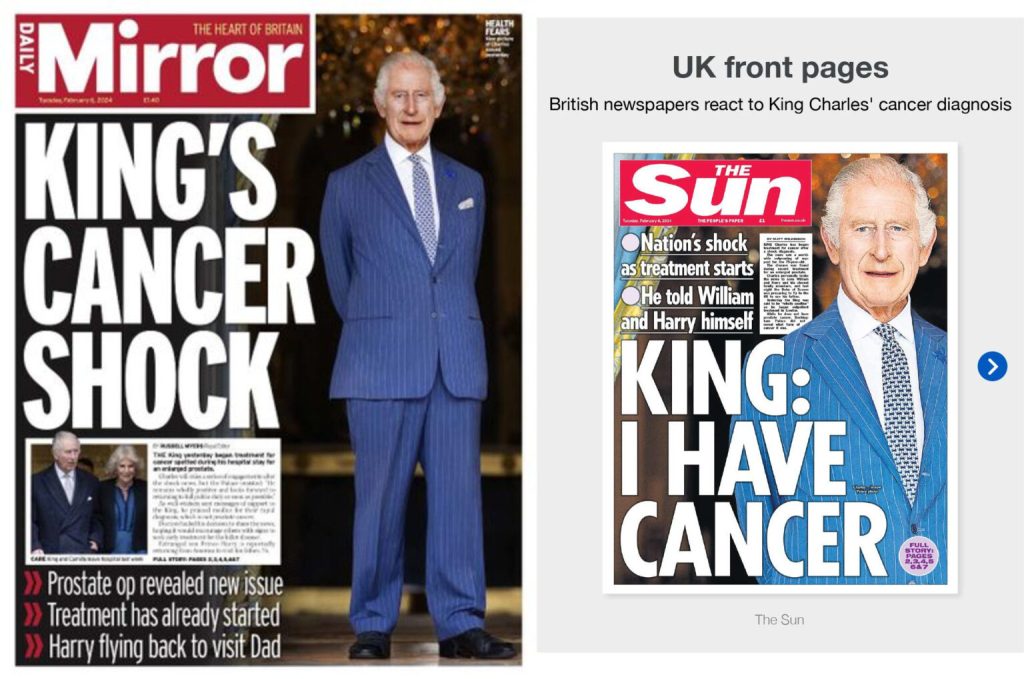
In February 2024, less than two years into his reign, King Charles III was diagnosed with prostate cancer. Though caught early and described as treatable, the diagnosis rattled a nation emotionally tethered to the monarchy as a symbol of stability. Tabloid headlines captured the unease: “King Has Cancer” (The Sun), “King’s Cancer Shock” (The Mirror). Beneath the headlines, a more subtle drama was unfolding—not of crisis, but of quiet, calculated transition.
Charles remained visible. In July 2025, he resumed some light royal duties: attending cancer awareness fundraisers, meeting hospital volunteers, and holding low-key audiences at Buckingham Palace. But the palace machine had clearly adjusted. Public focus has shifted toward Prince William, the Prince of Wales, who now frequently represents the monarchy abroad, most recently at the NATO summit in Warsaw and during a Commonwealth climate dialogue in the Caribbean. His growing diplomatic footprint is no longer just supportive; it is preparatory.
The British are famously fond of order and are often over-prepared for transitions. Even as Charles continues to serve with stoic grace, the long-view choreography of succession has already begun.
This is where the irony thickens.
Prince Harry, born just two years after William, is a trained military pilot, a decorated soldier, and once one of the most dynamic members of the royal family. But despite experience and charisma, he is sixth in line to the throne, outranked not only by his older brother but by William’s three young children. Unless a constitutional crisis akin to Edward VIII’s 1936 abdication recurs, Harry will never rule. And even if his nephews and niece are still school-aged, tradition trumps maturity. Birth order over readiness. Symbolism over suitability.
This tension isn’t exclusive to palaces in London. It finds an unlikely echo in the rhythm of rural homesteads in western Kenya.
Among the Luo community, lineage and seniority hold powerful sway. Status in the homestead isn’t simply determined by age—it’s mediated by the order of a man’s mother in the marriage hierarchy. If the first wife (mikayi) has a son who is one year old, and the second wife has a thirty-year-old son, it is the toddler who outranks his elder half-brother. By custom, the older son cannot build his simba (man’s house) or marry until the younger son from the mikayi has completed his rites of passage.
Readiness is irrelevant. What matters is sacred order.
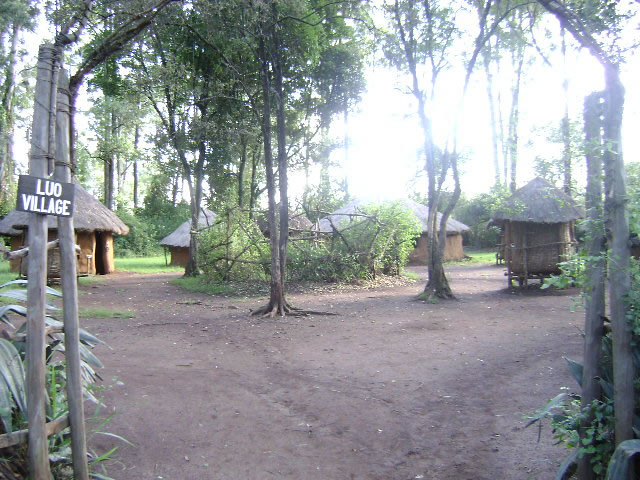
Typical set up of a Luo Homestead. Photo/Flickr.com
But even within this deeply codified tradition, there are accommodations. Cultural rituals exist to bend the structure without breaking it. A symbolic gesture—like the gifting of a cow to a respected elder or friend—can ritually “clear the path” for the older son to marry or build before his younger, higher-ranked sibling.
Such a cultural paradox played out in one extended family. The older son of a junior wife was born in the late 1960s. By the early 1990s, he was ready to marry. But the Mikayi’s son, a mere teenager born more than a decade later, still held ritual seniority. Recognising the impracticality, elders performed a discreet and respectful rite to allow the older brother to marry. No conflict followed. The homestead remained whole. The future was honoured, but the present was wisely accommodated.
This quiet ritual compromise is echoed, if on a vastly grander scale, in the current transition within the British royal family. William is not king, but he increasingly acts the part. His presence has grown, not through a declaration or abdication, but through action: hosting state dinners, meeting heads of state, and representing British interests abroad. Queen Camilla and other senior royals have also expanded their roles, filling ceremonial gaps as the King undergoes treatment. The reins of power are being passed—not abruptly, but methodically. It’s not just delegation, it’s fortification.
Like a Luo dala (homestead), the British monarchy is being reinforced to endure beyond the current patriarch. The elder is still present, still respected. But the next generation is being prepared to hold the centre.
And this is where the metaphor deepens.
Succession, whether in a kingdom or a cattle kraal, is rarely just about who is ready. It’s about who has been designated. Tradition, not competence, often sets the order. Power is passed not to the one most equipped, but to the one most expected.
That system is not exclusive to the Windsors or the Luo. Monarchies in Morocco and Thailand operate under similar tensions, where age, health, and custom collide. In Morocco, King Mohammed VI’s long absences due to illness have sparked speculation about his son, Crown Prince Moulay Hassan, taking on more responsibilities. In Thailand, the royal succession remains tightly controlled, with military and constitutional entanglements shaping how and when power can shift.
Even in democratic setups, political dynasties reflect this pattern. In Kenya, members of founding families continue to wield significant influence, often bypassing merit-based systems. The children of past presidents, prime ministers, or governors are seen as natural successors, not necessarily for their ideas, but because of their bloodlines.
Whether in a throne room or a village compound, power is rarely a straight line. It twists through lineage, sickness, ritual, law, and social expectation. Those most prepared may still find themselves waiting. Behind younger siblings. Behind ceremonial rites. Behind history itself.
The great irony is that both in castles and kraals, power is clothed in the garments of order, but that order often conceals deep human anxieties: fear of instability, need for continuity, resistance to change. Succession is as much about emotion and identity as it is about function.
So whether one gazes at Windsor Castle or a homestead in Kisumu, the lesson holds. Power is never only about capability. It is about timing, tradition, and the delicate dance between the present and what comes next.
In an age when leadership transitions, political, royal, familial, are happening across the globe, this paradox remains. The systems we build to safeguard the future often require us to slow down the present. To let the heir wait. To let the elder endure. To let power transition, not transfer.
Because in the end, kings and kin alike must answer the same ancient question: Who comes next? And more importantly, when?
Whereas news is free, journalism is costly.
Whereas knowledge is free, its production is steep.
Support independent storytelling and thoughtful pieces through MPESA Till number 9653845.