What you need to know:
- The role the media has played in helping containing the disease and, potentially, saving lives can’t be underestimated.
- A host of journalists trying to cover stories on Covid-19 and inform citizens about the genuineness of their governments’ response to the crisis have been harassed, arrested, assaulted, threatened, and intimidated by authorities and security agents.
On 31 December 2019, the WHO announced the existence of ‘mystery pneumonia’. A virus that would later be identified as (SARS-CoV-2), and named (Covid-19).
By October 1st, 2020, the disease had spread across the world with 34,162,732 cases recorded worldwide in 188 countries; 1,020,932 deaths while 23,743,318 has recovered globally according to John Hopkins University & Medicine.
Over the period the virus has been in existence, the media has followed every step of the journey through ceaseless headlines, analysis, continuous updates and reports and investigations.
The role the media has played in helping containing the disease and, potentially, saving lives can’t be underestimated. But the achievements the media has made towards the war against Covid19 has come painfully to the media industry across the world. There have been threats, intimidation, harassment, violence and even deaths of journalists.
While journalists and media organisations have been doing their utmost best to keep up to date with the outbreak, fight misinformation, disinformation, myths, rumors, fake news and conspiracy theories that have the potential to do serious harm, they have also been combating violence, threats and intimidation from governments across the world.
With many countries caught flatfooted with the Covid-19, many world leaders quickly enacted laws that hampered free information and curtailed media freedom so as to stop it from telling its citizens its state of preparedness or lack of it in dealing with Covid-19.
A host of journalists trying to cover stories on Covid-19 and inform citizens about the genuineness of their governments’ response to the crisis have been harassed, arrested, assaulted, threatened, and intimidated by authorities and security agents.
Suppress media
Across the world, there have been many instances of deliberate effort to suppress media freedom such as Brazil where President Jair Bolsonaro condemned journalists covering the epidemic. China, India, Hungary, Russia, Venezuela, Iran, Malaysia, Greece, Germany, Pakistan, Spain, Myanmar, Kosovo, Palestine, Moldova, Albania, Mexico, Belarus, Nicaragua, Poland, Bolivia, Singapore, Bangladesh, Nepal, Ukraine among others have been accused for attempt at controlling what journalists say or not regarding Covid-19.
Meanwhile, Vietnam, Cambodia, and Indonesia have all enacted laws giving their rulers censorship powers but guised as crisis measures linked to the Coronavirus pandemic. Iraq suspended the license of some news agency while the United Arab Emirates introduced a hefty fine on journalists. In Jordan, security forces arrested a TV company’s owner while Turkey has jailed a host of journalists.
In Zimbabwe, a freelance journalist was beaten up by the police and forced to delete video footage on his camera after filming a police operation to disperse people during the lockdown in Harare.
The same experience has been reflected in other African such as Kenya, Uganda, Somalia, Tanzania, Ghana Nigeria, Egypt, Algeria, Namibia, DRC, South Africa, and Zambia, where international media and media freedom watchdog has reported the atrocities.
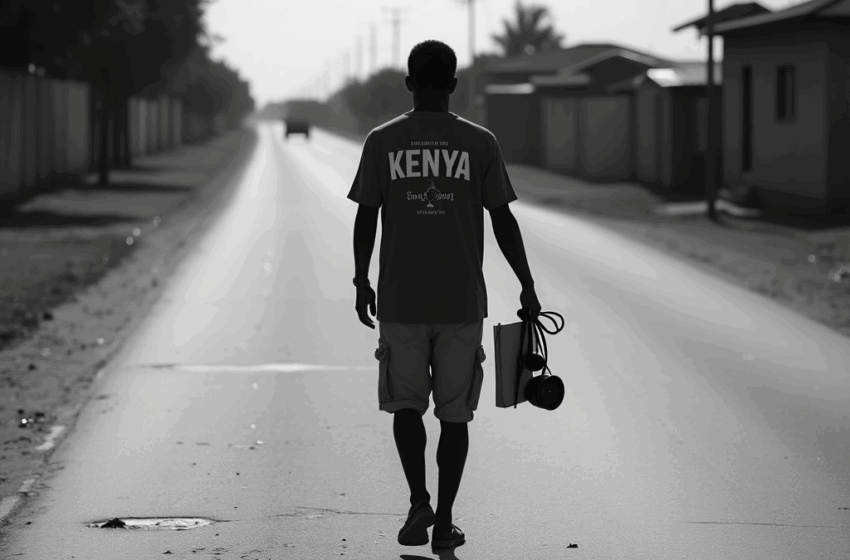
Here in Kenya, the war against the media has been as bad as the rest of the world, with threats and intimidations becoming an almost daily occurrence.
The most recent case being where the High Court in Nairobi has directed that Nation Media Group (NMG) to pull down an investigative report dubbed ‘Covid-19 millionaires’ from all its social media platforms pending hearing and determination of a case filed by one of the companies mentioned in the exposé.
It is evident that Covid-19 has shaken every corner and core of the world; disrupted lives as we knew it, and threatened the very existence of humankind. With citizens locked down in homes and curfews imposed, there is a need for timely and accurate information to the masses.
The citizens must remain informed so as to meaningful engage in an open public debate and help in combating this pandemic. The world leaders should be encouraging freedom of expression, defending media freedom and protecting journalists, instead of assaulting them. Media’s job is to help disclose and disseminate information timely, effectively, and comprehensively.
Governments across the world must not use Covid-19 pandemic to infringe upon the rights of its citizens especially on the gains and liberties of the media. Since the advent of Covid-19, there has been a lot of, myths, misinformation, disinformation, rumors, and fake stories. We are living in an era of infodemic. These ‘Infodemics’ have hindered an effective public health intervention and created panic, mistrust, and confusion among citizens.
In March 28, Director-General, World Health Organization (WHO) Dr. Tedros Adhanom Ghebreyesus, said that “we’re not just fighting an epidemic; we’re fighting an infodemic,” denoting fake news that “spreads faster and more easily than Coronavirus.”
In times like this, the media remains the only reliable source of correct information for the masses. Studies has shown that media is a trusted and effective in disseminating information to help in behavior and attitude change and to, provide accurate health information.
Health information
As such, citizens consider it a primary means of reliable public health information. The centrality of media in these times therefore can’t be ignored. The media doesn’t just provide immediate information, but also is an advocacy and health campaign tool, a source of education, and entertainment.
The World Health Organization Director-General Tedros Adhanom has repeatedly said that timely and accurate information is crucial to combating the Coronavirus pandemic. As much as the world leaders wants to protect its citizens from Covid-19, they must act within the confines of the law. Freedom of expression and Freedom of the press are rights guaranteed under Article 19 of the United Nations Universal Declaration of Human Rights.
Coronavirus has so far killed millions of people and may just kill more considering the prevailing circumstances. Fighting the disease is every individual’s responsibility. That responsibility however, can only be bore if individuals are properly informed.
As noted by the International Press Institute Executive Director Barbara Trionfi, “the free flow of independent news is more essential than ever in this situation, both in informing the public on vital measures to contain the virus as well as in maintaining an open dialogue and debate on the adequacy of those measures, which is essential for winning the necessary public trust for them.”
This article was published by Nation.Africa on October 2, 2020
Link to article>>https://nation.africa/kenya/blogs-opinion/blogs/world-leaders-must-not-use-covid-19-to-suppress-media-freedom-2455288